
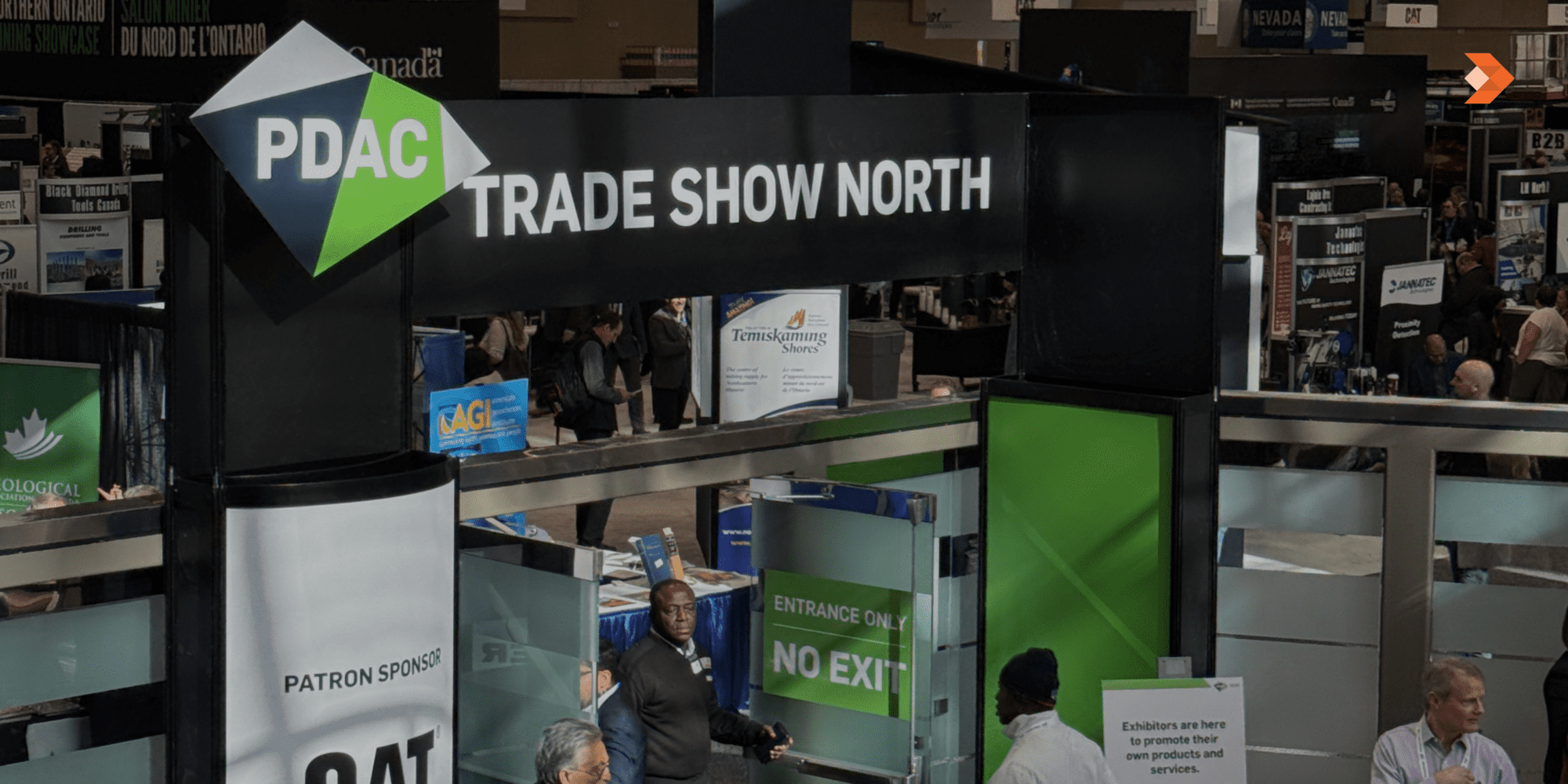
PDAC 2026 did not feel like a typical industry conference. This year’s convention drew 32,155 participants, the highest attendance in the event’s 94-year history, along with a record-breaking 1,300+ exhibitors filling both the North and South buildings of the Metro Toronto Convention Centre for the first time. The numbers alone told a story: the global mining industry is moving with urgency. Our team spent four days on the floor in conversations with exploration companies, major producers, junior miners, geoscientists, and the next generation of talent trying to break into an industry that employs more than 724,000 people and contributed $156 billion to Canada’s GDP in 2024.
Here’s what we actually heard.
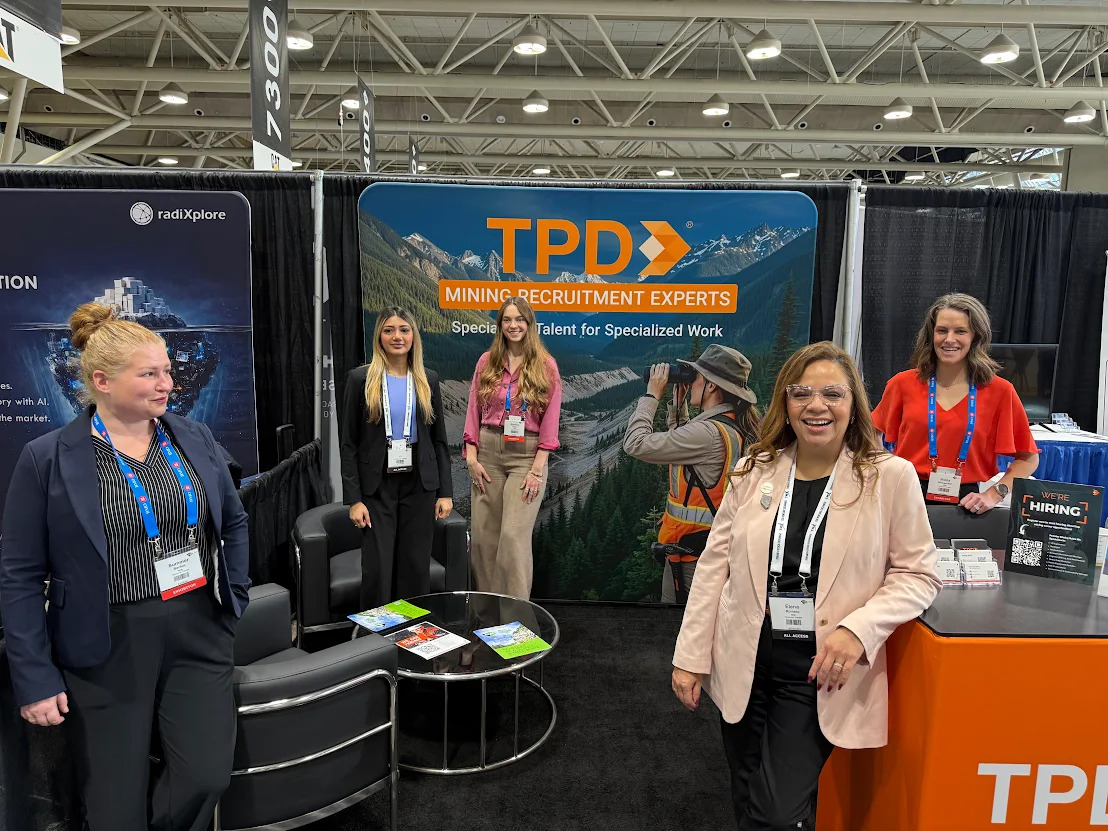
The TPD team at PDAC 2026
The Talent Pipeline Problem Is Getting Harder to Ignore
The demand for geoscientists and engineers was the loudest signal at PDAC this year. Nearly every conversation we had with hiring managers and operations leaders circled back to the same constraint: the supply of qualified geologists has been declining for over a decade, and it’s starting to show up in project timelines.
This isn’t a new observation, but the urgency feels different now. Companies aren’t just struggling to fill open roles, they’re struggling to find candidates at all. The candidate pool that would have naturally replenished itself through university programs hasn’t kept pace with industry demand, and the senior professionals who carry decades of institutional knowledge are retiring. What’s being left behind is a widening gap that won’t close on its own.
For us, this reinforces something we’ve been saying to clients for a while: reactive hiring in mining doesn’t work. By the time a role is urgent, the candidates you want are already placed or fielding three offers. The firms building proactive relationships with specialized mining recruiters now are the ones who won’t be scrambling in 2027.
The Industry Is Still Overwhelmingly Male, But the Incoming Class Looks Different
Walking the floor at PDAC, the gender imbalance was visible and stark. Mining remains one of the most male-dominated industries in the professional world, and the conference reflected that clearly, particularly among mid-career and senior professionals.
What gave our team genuine optimism, though, was looking at the student and early-career attendees. The next generation entering geoscience and mining engineering programs is tracking closer to 50/50 in terms of gender representation. That matters. It won’t fix the current workforce picture overnight, but it signals that the pipeline, if the industry creates real entry points and doesn’t lose that talent to more welcoming sectors, the pipeline could look meaningfully different within a decade.
We attend the Student Industry Mixer at PDAC every year specifically for this reason. Walking into that room gives us genuine hope, the energy, the diversity, the richness of who’s coming into this industry. The PDAC HRD Committee does an exceptional job with this event year after year, and it’s one of the highlights of the week for us personally.
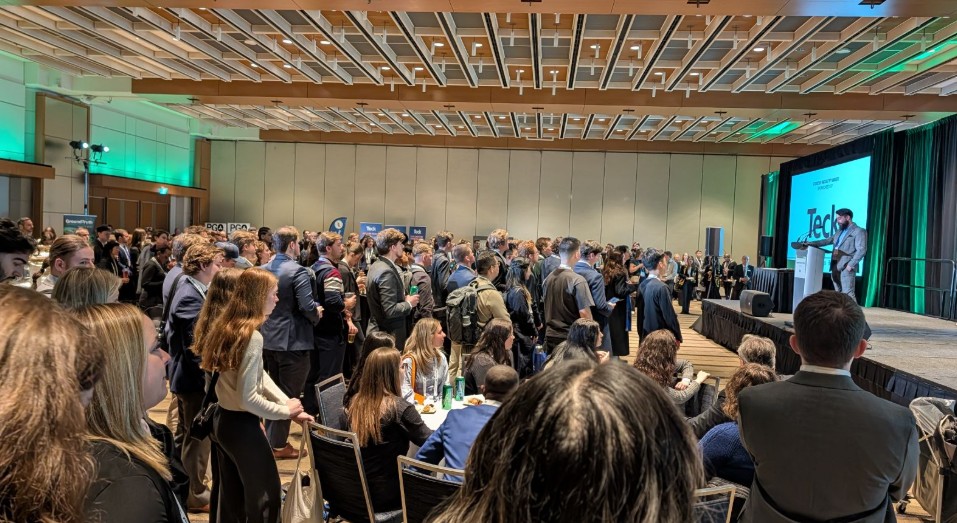
Student Industry Mixer, PDAC 2026
The conference also had a deeply generational feel to it. We noticed fathers walking the floor with their sons, clearly trying to pass the industry on to the next generation. That pride in the work is a real asset. The challenge is making sure the industry builds the same sense of belonging for people who don’t come from that lineage.
Geopolitics Is Reshaping Who Wants to Work With Canada
This was the conversation thread we didn’t fully anticipate going in. European, African, and Middle Eastern companies were out in force at PDAC this year, and their interest in Canadian partnerships was pointed and deliberate. Governments from around the world attended alongside Canadian federal, provincial, and municipal leaders, a signal of just how seriously mineral supply security is now being treated as a policy issue.
Parliamentary Secretary Claude Guay put it plainly at the Opening Ceremonies: critical minerals are no longer just economically important, they’re foundational to national security, the backbone of clean energy transition, and essential inputs for defense, AI, communications, and advanced manufacturing. With the current geopolitical climate making some traditional alliances feel less stable, Canada is being looked at differently. Companies that previously defaulted to US-based partnerships are actively looking to diversify, and Canadian mining firms are on the receiving end of that shift.
Jeff Killeen, Director, Policy & Programs at PDAC added context that stopped the room: more than 25% of Canada’s land, over 2.6 million square kilometres, an area equivalent to all of Western Europe, is currently off-limits or access-constrained for mineral exploration due to regulatory conservation frameworks. His message was direct: integrating public geoscience and mineral potential into land use planning is not optional if Canada wants to deliver on its promise as a global minerals leader.
For talent, the international interest creates a real dynamic. Several companies we spoke with are actively seeking North American professionals and are prepared to sponsor visas and work permits to get them. The question they kept asking wasn’t “can we find someone?”, it was “are candidates actually willing to relocate internationally?” The talent exists. The appetite from employers is there. The variable is whether candidates are open to it, and that’s a conversation worth having if you’re in geoscience or mining engineering and looking for something outside the familiar.
The Ring of Fire Is No Longer Just a Concept on a Map
One of the most significant moments of PDAC 2026 happened not in a keynote but at the Northern Ontario Mining Showcase, where Premier Doug Ford joined Chief Bruce Achneepineskum of Marten Falls First Nation and Chief Lorraine Whitehead of Webequie First Nation to announce community partnership agreements advancing road infrastructure into the Ring of Fire.
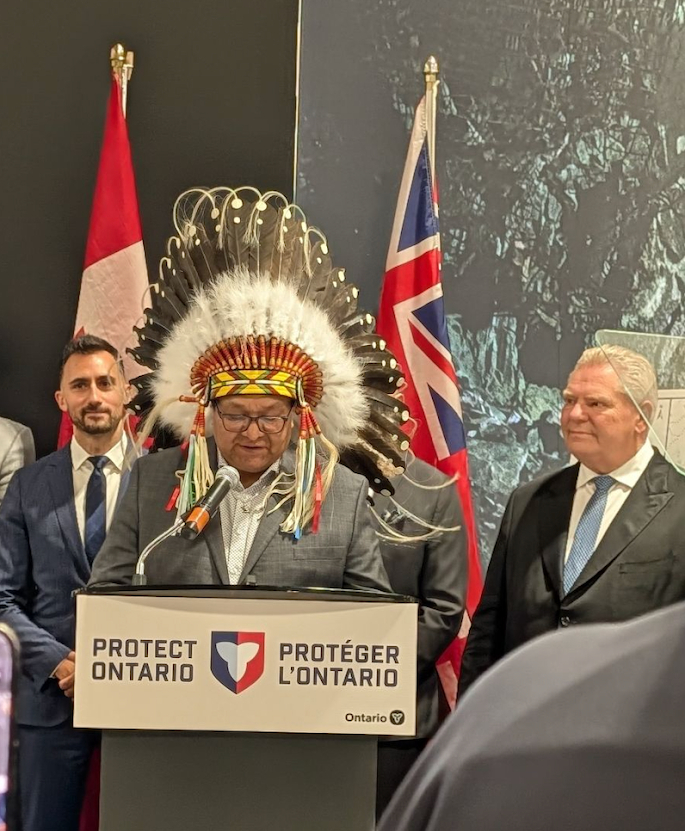
Chief Bruce Achneepineskum of Marten Falls First Nation at the Northern Ontario Mining Showcase, PDAC 2026, alongside Premier Doug Ford.
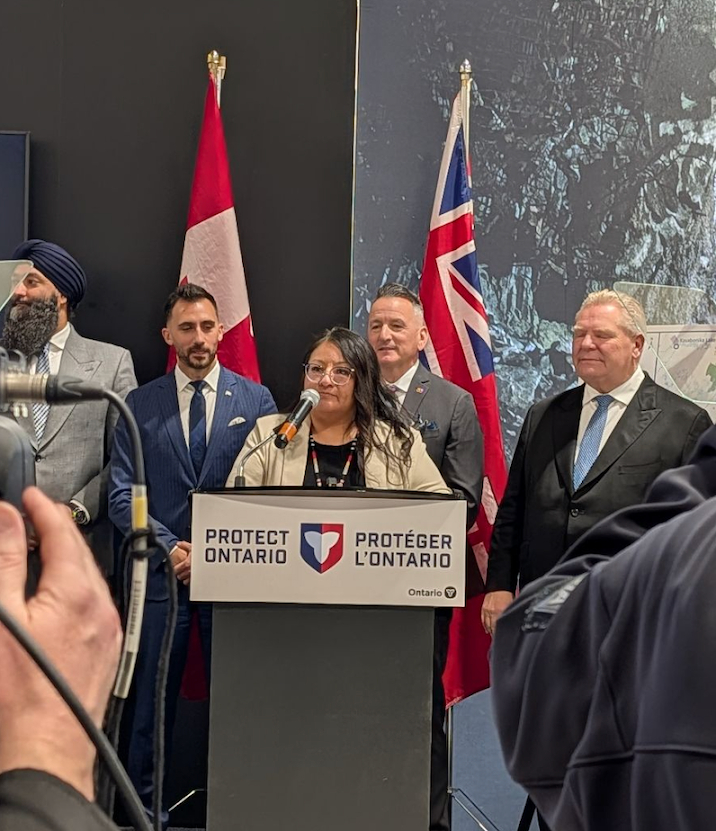
Chief Lorraine Whitehead of Webequie First Nation addresses delegates at the Northern Ontario Mining Showcase, PDAC 2026.
This has been a long time coming. The Ring of Fire is one of the most significant critical mineral deposits in Canada, rich in nickel, copper, chromite, and cobalt. It has been discussed at PDAC for more than 15 years. What’s different now is that the foundational infrastructure is moving. The Marten Falls Community Access Road, the Norseman Road Link, and connecting roads to the provincial highway network are transitioning from environmental assessment to construction preparation.
What made the announcement particularly meaningful was how it was framed. Both chiefs spoke about self-determination and community-led development, not just jobs and royalties, but training, education, capacity building, environmental stewardship, and the ability for their communities to lead and benefit from work happening on their own land. Chief Whitehead was direct: this government-to-government announcement is only the beginning of a conversation about commercial possibilities. That framing, cautious, community-centred, and forward-looking. That is the model that sustainable resource development in Canada needs to follow.
Minister Lecce noted that Ontario has moved from 15th to 2nd in the world for mining investment. The Ring of Fire is a significant reason why that momentum is credible.
Remote Locations Remain the Industry’s Stickiest Hiring Problem
Remote site staffing came up in almost every client-facing conversation we had. The challenge isn’t just finding qualified candidates, it’s finding candidates who will actually stay.
One insight that came up repeatedly resonated with what we’ve observed in our own placements: candidates who are single and relocate to a remote operation often don’t last. They settle in, realize how isolated the role is, and start looking for a way out. The math changes when a whole family makes the move. When a spouse finds work nearby, when kids are enrolled in school, when the family has committed to making a new place home. The retention numbers look completely different. They’re invested in it working.
Effective remote placement isn’t just about matching a resume to a job description. It’s about preparing candidates for what they’re actually walking into, the geography, the community, the pace of life, the realistic picture of what day-to-day looks and feels like. The clients we work with on remote placements who invest time in that preparation upfront have materially better outcomes. The ones who skip it pay for it six months later.
ESG Is Being Put to the Test, And the Industry Knows It
The sustainability and ESG conversations at PDAC this year were more grounded than in previous years. Less framework-talk, more accountability.
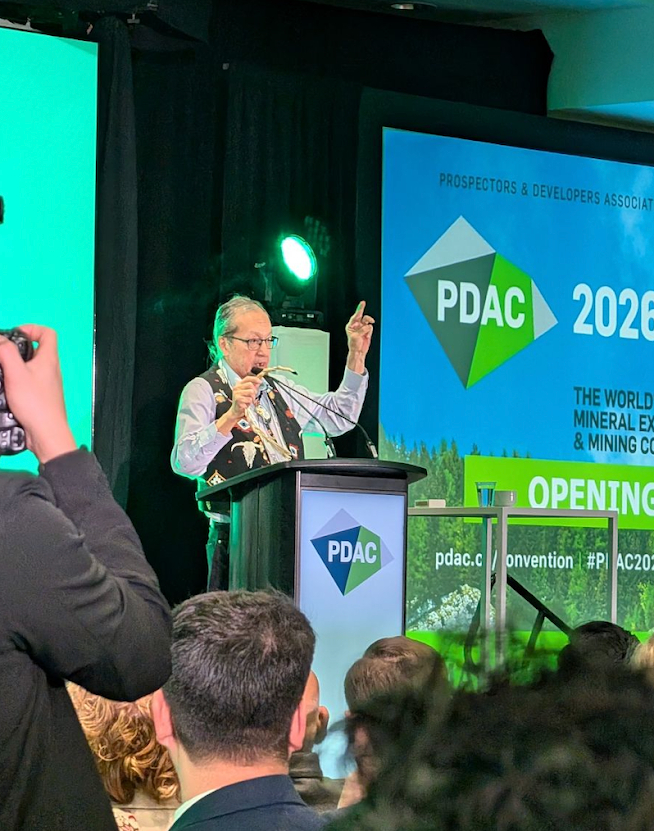
Knowledge and wisdom keeper Ed Sackaney addresses delegates at the PDAC 2026 Opening Ceremonies.
The opening ceremonies set an important tone. Knowledge and wisdom keeper Ed Sackaney, who has attended PDAC for 11 years, spoke candidly about what Indigenous communities need from resource developers, not just consultation, but genuine relationship. He urged industry leaders to seek out Indigenous leaders proactively: to come to the table, to think in decades rather than project lifecycles, and to ask what kind of legacy they’re leaving for the next generation. It was one of the more honest moments of the week.
That call was answered, at least in one visible way, at the Northern Ontario Mining Showcase later in the week, where the Ring of Fire announcement was framed explicitly around Indigenous equity partnerships and community-led environmental oversight, not just permits and timelines. It doesn’t erase a long history of difficult relationships, but it represents the direction things need to move.
A session we attended on digital influence and ESG made a point worth repeating: the way a company’s story gets told, through social media, community channels, and industry voices, now shapes how investors, regulators, and future employees understand that company’s relationship to the environment and to Indigenous communities. Not every story is yours to tell, and Indigenous stories in particular require consent, accuracy, and cultural safety. For mining companies navigating land rights and community relationships, this isn’t just a communications note, it’s a governance consideration.
Younger professionals entering the industry are paying close attention to all of this. The companies that can speak credibly to their environmental commitments and community relationships will have a real advantage in attracting the next generation of talent.
What We’re Taking Back to Our Clients
A record 32,155 people showed up to PDAC this year because this industry matters, and because the challenges it’s facing are real and urgent. The talent pipeline for geoscientists and engineers is under strain with no quick fix in sight. International interest in North American expertise is creating genuine opportunities for candidates willing to move. Remote retention is a solvable problem, but only when it’s treated as one from the first conversation. The Ring of Fire is advancing, and with it comes significant demand for skilled workers across operations, environmental, engineering, and community engagement roles. And the industry’s demographic shift is coming, slowly, but visibly, in the faces of the next generation walking into rooms like the Student Industry Mixer.
TPD’s mining recruitment team works with exploration companies, mid-size producers, and major miners across North America to navigate exactly these challenges. If any of what you heard at PDAC this year sounded familiar, we’d welcome the conversation.
TPD Workforce Solutions has been placing mining talent for 45 years. We specialize in geoscience, engineering, technical and operations roles across North America, including remote and fly-in fly-out operations.